Most machining is done with standard tools, and that is usually the right call: they are in stock, cheap to replace and proven. A custom tool — ground to your drawing — costs more per piece and takes longer to arrive. It earns its place when it removes something more expensive: an extra operation, a tool change, a compromise that causes scrap, or a feature a standard tool cannot reach. This guide sets out how to tell the difference.
When a standard tool is the right answer
- A catalogue size and geometry fit the feature. If the diameter, length of cut and reach exist as a standard item, start there.
- The part is a prototype or the design may still change. A tool made to a drawing that changes next month is wasted.
- You need the tool this week. Standard items ship within days; a custom tool takes weeks.
- Volumes are low and the operation is not the bottleneck. If one more tool change costs seconds on a short run, a special tool rarely pays for itself.
Signs a custom tool will pay
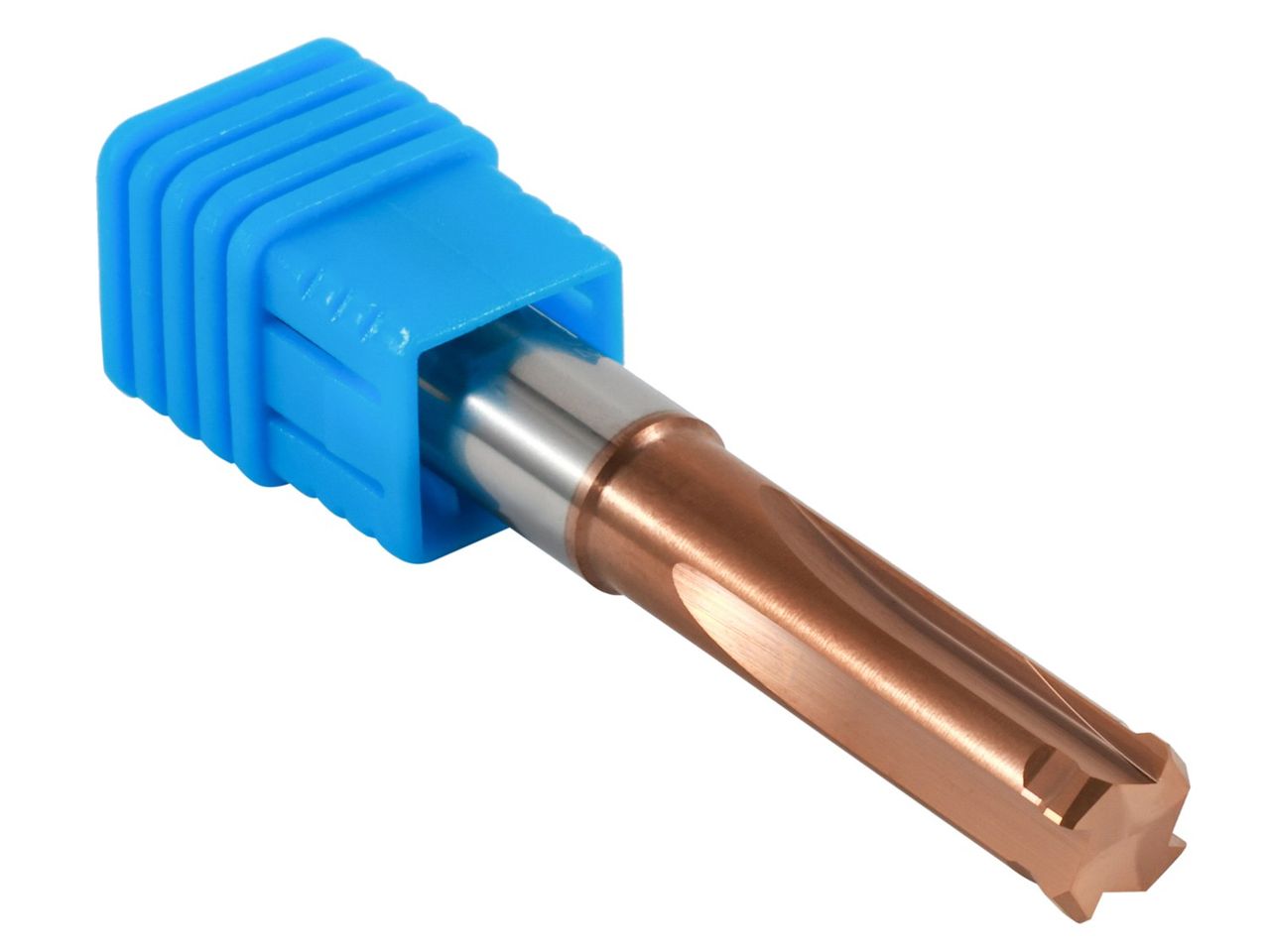
Several operations can become one. A stepped hole drilled, counterbored and chamfered with three tools can often be finished with one step drill or step reamer. That removes tool changes and keeps the diameters concentric, because they are ground on one body in one set-up.
The feature has a profile. Grooves, radii, chamfers and form features that a standard tool would cut in several passes — or cannot cut at all — can be ground as a single form tool.
Reach or clearance is the problem. Long necks, reduced shanks or special lengths reach features behind shoulders or deep in a pocket without the deflection of an oversized standard tool.
A standard tool is a compromise that costs parts. Burrs, chatter, poor finish or short tool life in a particular material often come from a geometry chosen for general use. A flute count, helix, edge preparation or coating chosen for your material and feature can remove the compromise — see the case on clearing burrs in tungsten heavy alloy.
The same feature runs in volume. Savings per part — seconds of cycle time, one fewer tool in the magazine, less rework — add up quickly when the part repeats.
What changes when you order a custom tool
- The drawing comes first. We send a drawing of the tool as it will be made, and production starts only once you approve it in writing.
- Inspection against that drawing. Non-standard tools ship with an inspection report against the approved drawing.
- Lead time. Custom tools take 15–30 working days, depending on the difficulty and the number of operations. Plan the first order around that, and reorder before the last tools wear out.
- Order quantity. Custom tools are made in small batches; minimums depend on the tool — custom reamers, for example, start from 5 pieces per size.
Examples
Recent made-to-order tools include single-flute cutters for aluminium, two- and three-flute stepped tools for an aluminium oil pan, and a ball nose end mill for tungsten heavy alloy — see custom tooling. Stepped and coolant-through reamers are covered on the reamer page, and PCD form tools for aluminium in PCD vs carbide for aluminium.
How to start
Send the part drawing, the material and hardness, the feature you want to machine, the tolerance and finish, your machine and holder, and the quantity. A sample or a clear photo of the tool you use now helps too. The full checklist is in what to send for a custom tool quote, or send your drawing — we reply within one working day.