Tungsten heavy alloy — tungsten bound with nickel and iron, often written W-Ni-Fe — is used where a small part has to carry a lot of mass: balance weights, counterweights, radiation shielding and vibration dampers. It is dense and tough rather than brittle, and on the machine it behaves more like a tough steel than like pure tungsten. That toughness is also why burrs are a common problem when grooves or profiles are milled into it.
The problem: rolled-over burrs on every groove
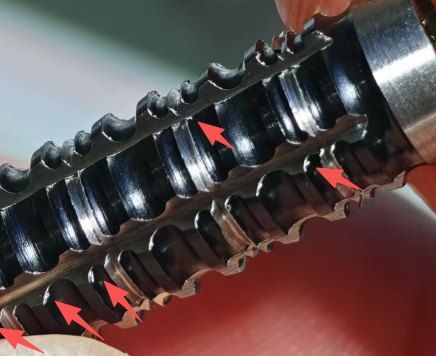
A customer machining small precision parts in tungsten heavy alloy was milling a series of profiled grooves along each part. The groove form was right, but the groove edges came off the machine with heavy rolled-over burrs: material pushed over the edge instead of being cut away cleanly. On a part like this, every burr has to be removed before the part can be finished.
What we changed
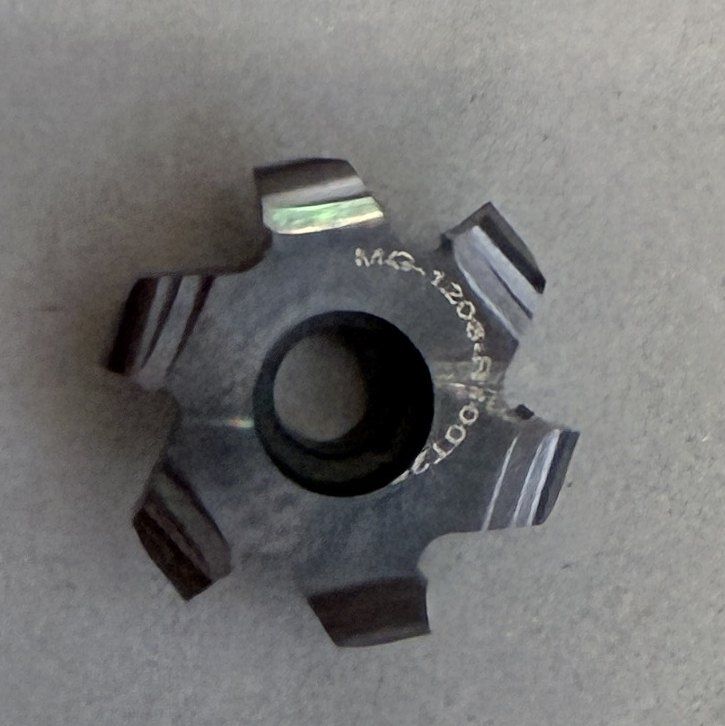
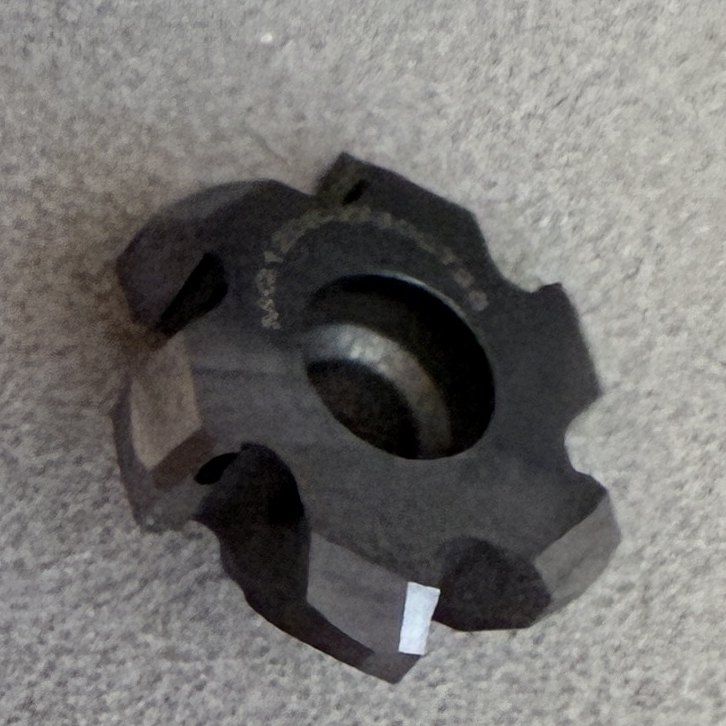
The grooves are cut with our custom multi-tooth carbide form milling inserts, mounted on a shank holder. Working with the customer on the machine, we adjusted the cutting parameters. The clip below shows the insert being checked on the spindle, then the first grooves being cut.
The result
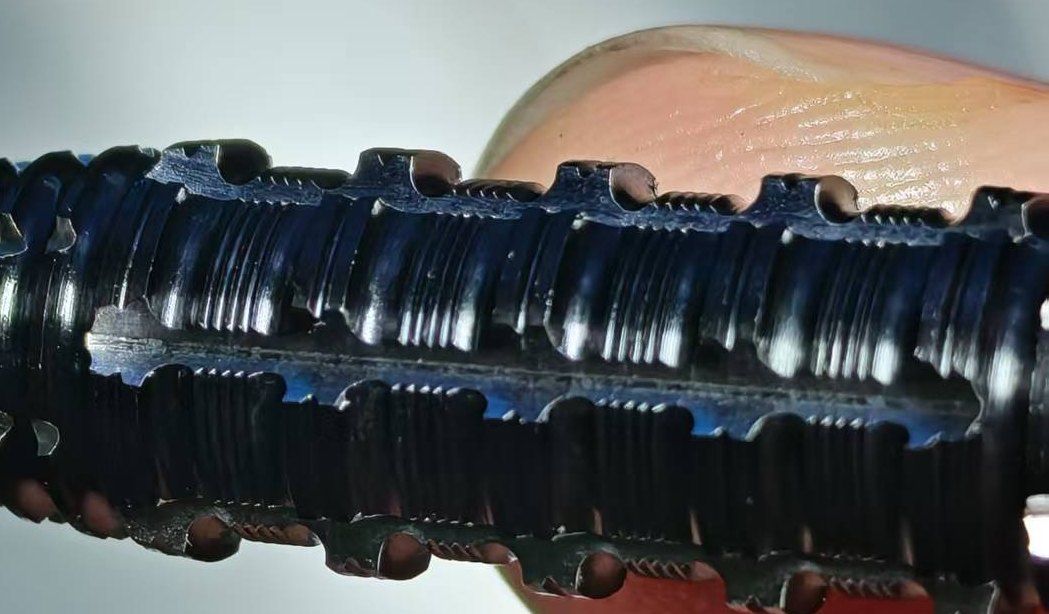
After the parameter adjustment the groove edges came off clean, without the rolled-over burrs, and the surface finish on the same feature was clearly better. The photographs are the customer's own, cropped so that only the machined grooves are shown.
Practical points for tough, dense alloys
- Tune the cutting parameters first. Rolled-over burrs often come from the cutting conditions as much as from the tool. Adjust speed, feed per tooth and depth of cut on the first parts, and check the groove edges after each change.
- Keep the edges sharp. A sharp cutting edge shears the material cleanly. A worn or rounded edge pushes material over the groove edge instead of cutting it, and that is where burrs come from.
- Minimise runout and overhang. On a small multi-tooth form tool, runout means one tooth does most of the cutting and wears first. A short, rigid set-up keeps every tooth working.
- Match the whole profile. The insert form should include the edge breaks the drawing asks for, so that the finishing pass leaves a finished edge rather than a lip.
- Check the first parts under magnification before running the batch. Burrs on small grooves are easy to miss by eye.
What to send
If you machine tungsten heavy alloy or another tough, dense material and have a burr or surface-finish problem, send the part drawing or a clear photo of the feature, the material grade, your machine and the tool you use now. See what to send for a custom tool quote, our form inserts, or request a quote.