
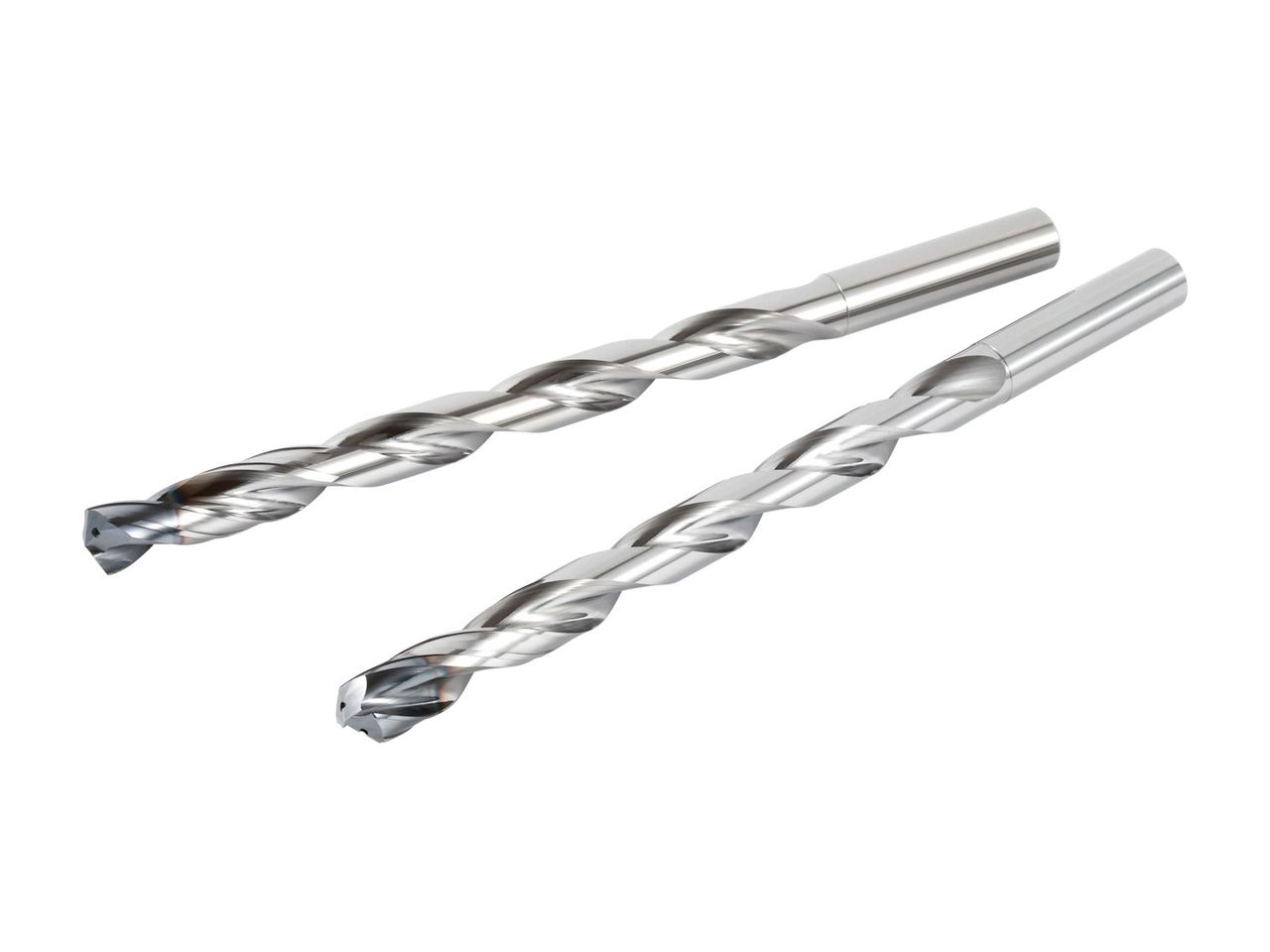
A deep hole is not just a normal hole made longer. Once the depth reaches many times the diameter, the drill has to stay straight over a long reach, chips have to travel the full length of the flutes to get out, and coolant has to reach the point. Most problems in deep hole drilling — a wandering hole, packed chips, a broken drill — come from one of those three. The answer is less about a single tool and more about the process around it.
1. Start with the hole and the real conditions
Before any drill is chosen, we go through the job with the customer:
- Blind or through. In a through hole, chips and coolant can leave at the exit. In a blind hole everything has to come back out along the flutes, so chip evacuation becomes the main design question.
- Workpiece material and hardness. It decides the edge geometry and the coating, and how the chips will form.
- The actual shop conditions. The machine and its spindle, the holder and its runout, the available reach, and above all the coolant: whether coolant can be delivered through the tool, and how much.
- The requirements on the hole. Diameter, depth, tolerance, straightness, and any cross-holes or interrupted exits along the way.
2. Design the drill for that hole
With the conditions agreed, we draw the drill and send the drawing for approval. The points that matter most for a deep hole:
- The point. It has to centre itself and enter the pilot hole cleanly, and cut with forces that keep a long drill running straight.
- The flutes. Flute form and finish decide whether chips leave the hole or pack in it. For blind holes in particular, this is where most of the design effort goes.
- The coating. Matched to the workpiece material and the coolant, rather than one coating for every job.
- The body. Overall length, flute length and shank chosen together. The flute length alone does not give the usable drilling depth.
Our standard RDS deep hole drills run from 8xD to 50xD, all through-coolant; longer or non-standard drills are made to the agreed drawing. This drawing-first approach comes from many years of matching long drills to customers’ parts.
3. Drill a pilot hole first
A long drill should not start a hole on its own. A short, rigid drill makes a pilot hole first. It gives the long drill an accurate guide for its first few millimetres, which is where straightness is decided. The pilot drill and the deep hole drill are specified together, so the long drill enters the pilot cleanly without touching its walls.
4. Enter slowly, then bring the drill up to working conditions
The long drill goes into the pilot hole at low speed and feed. Only once it is guided by the pilot and engaged in the material is it brought up to cutting conditions, with coolant running before it reaches full speed. A long, slender drill spinning at full speed outside the hole can whip. Entering slowly avoids that.
Whether the hole is drilled in one pass or in pecks depends on the drill design, the coolant delivery and the material. It is agreed together with the drill, not left to habit.
5. Trial, then raise the parameters step by step
The first parts are drilled with conservative parameters. The customer then raises speed and feed in steps, from slow to fast, watching chip form, the sound of the cut, the hole quality and the drill’s wear after each step. The aim is the best balance of cycle time and tool life for that machine and that part. That point is different on every machine and every material.
6. Keep the chips moving
Throughout the process, chip evacuation is the thing to watch. Short, well-formed chips that leave the flutes freely mean the process is stable. Long or packed chips, rising spindle load or a change in sound mean something needs adjusting — usually the feed, the coolant or the cycle — before the drill is at risk.
What to send
To plan a deep hole, send the drawing with the hole diameter and depth, blind or through, the workpiece material and hardness, your machine and holder, and how coolant is delivered. See our deep hole drilling guide for the standard series, or request a quote.